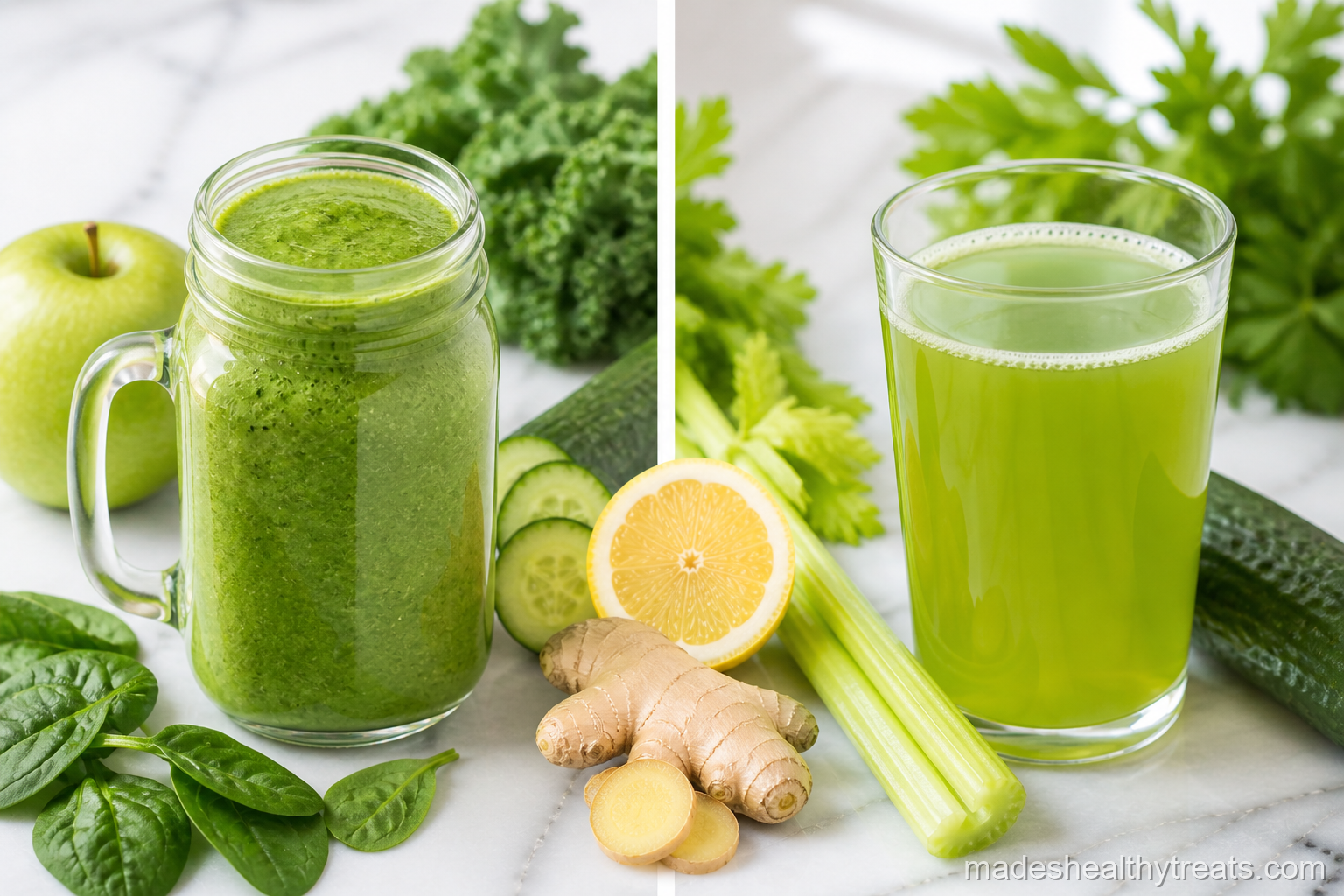
The practical difference between a smoothie and juice is what happens to the edible material. A smoothie keeps the ingredients blended together. A juicer or a sieve separates liquid from some of the solids. Choose the method for the texture and preparation you want.
Compare ingredients before comparing labels
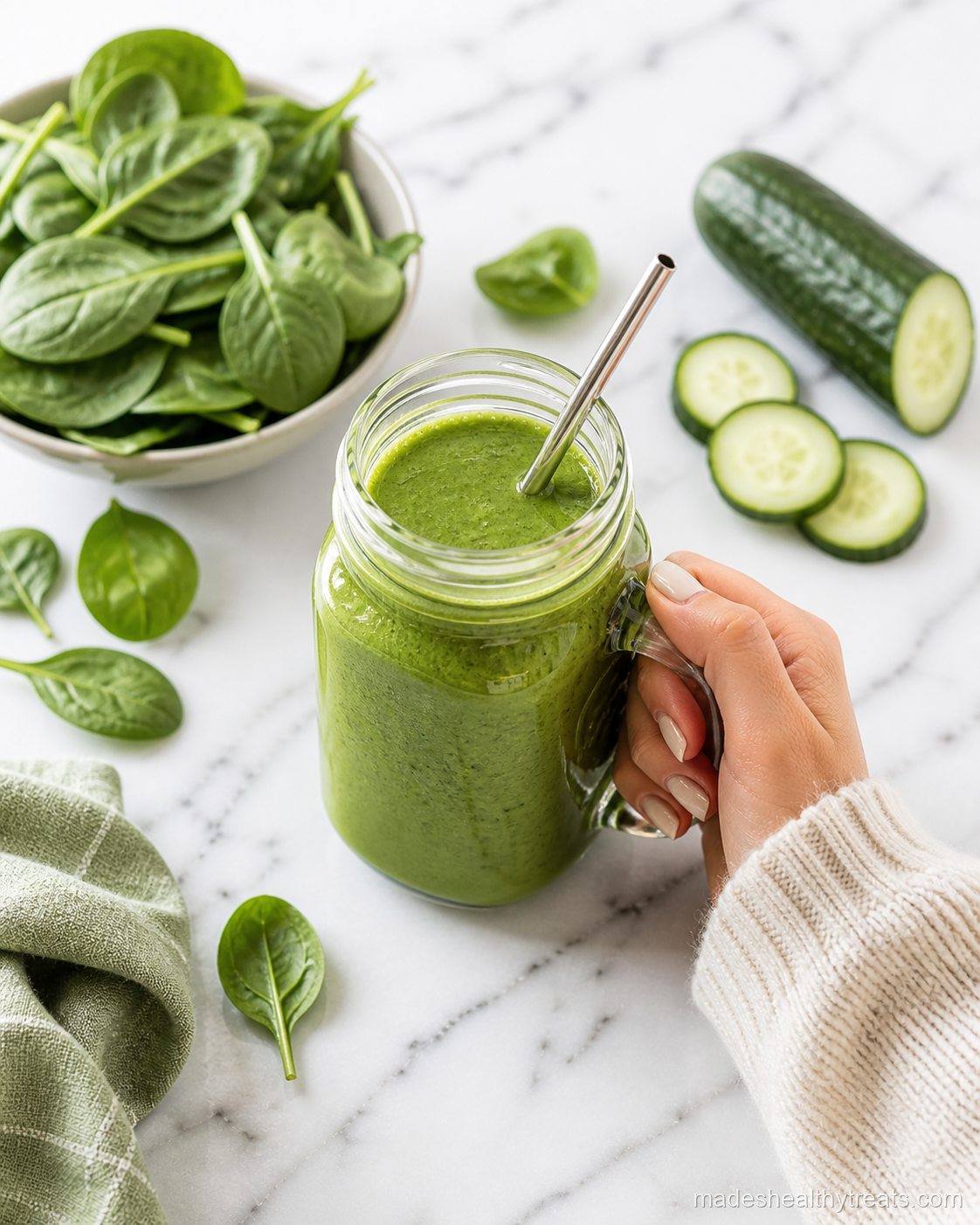
- Spinach: USDA lists 483 mcg vitamin K and 469 mcg vitamin A (RAE) per 100 g of the reference ingredient. USDA: Spinach, raw.
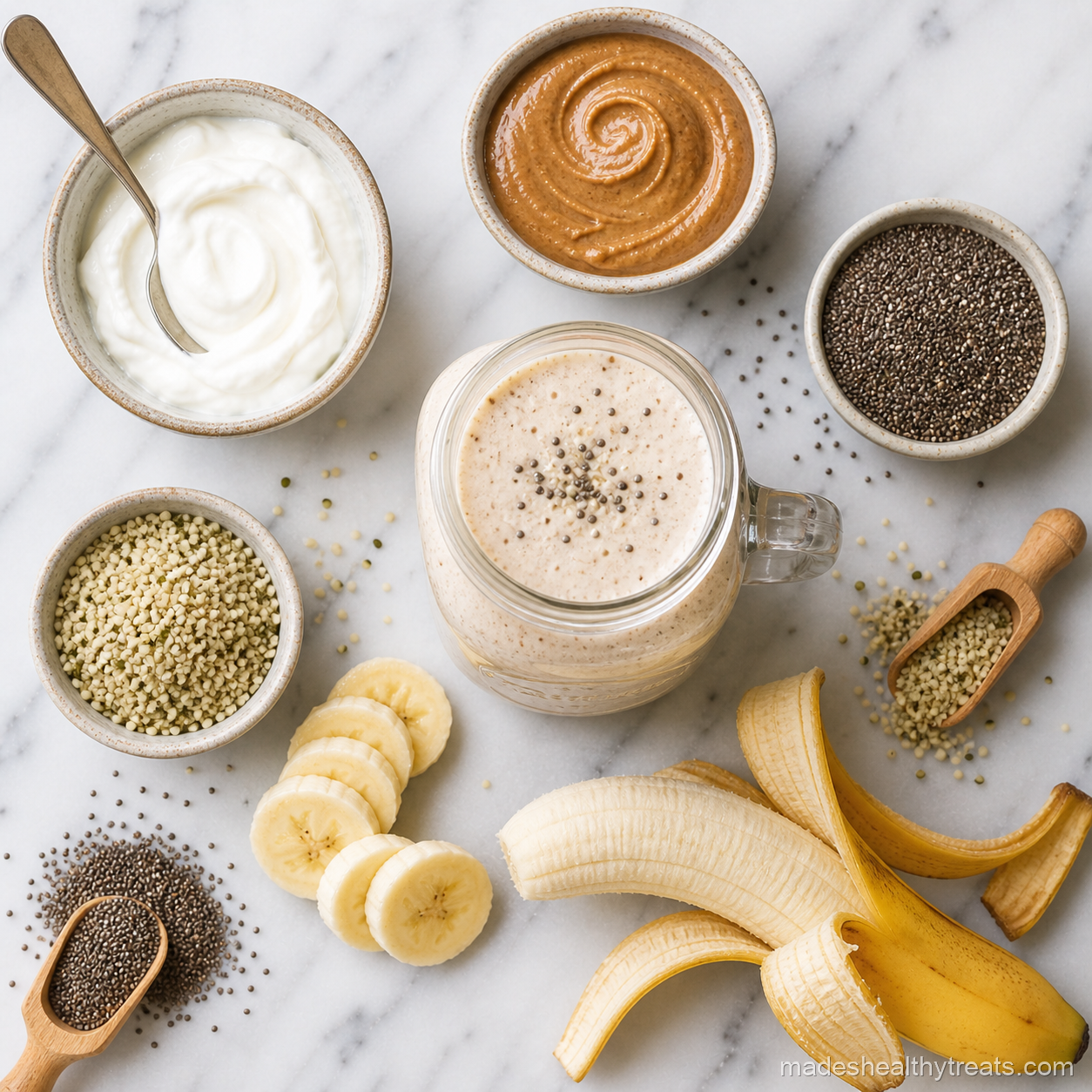
- Banana: USDA lists 0.367 mg vitamin B6 and 0.27 mg manganese per 100 g of the reference ingredient. USDA: Bananas, raw.
- Cucumber: USDA lists 16.4 mcg vitamin K and 0.259 mg pantothenic acid (B5) per 100 g of the reference ingredient. USDA: Cucumber, with peel, raw.
The reference amounts are per 100 g of each ingredient. They are not a calculation for a smoothie, and they cannot be copied onto a glass of strained juice. A different ingredient weight, removed pulp, or extra liquid changes the comparison.
Choose produce for your equipment
Soft fruit, leafy greens, yogurt, and enough liquid are straightforward components of many blender recipes. Firm carrots and raw beet need smaller pieces and equipment designed to handle them. A juicer has its own preparation requirements, including chute size and unsuitable ingredients. Read those instructions rather than assuming that anything edible can go through either machine unchanged.
Prepare one small comparison
Use a cucumber-and-apple blender recipe as written. Wash the produce, core the apple, cut the pieces, and measure the liquid. Blend according to the machine's instructions, then split a small portion into two bowls. Keep one portion as blended and strain the other through a fine sieve. This lets you compare the effect of removing pulp without changing all the ingredients at once.
Stop the machine before scraping. Strain over a bowl rather than pressing a full sieve above a small glass. Do not keep adding water merely to make the strained portion match a particular volume; that changes dilution as well as texture.
Substitutions that change the result
Yogurt, banana, oats, and nut butter are usually used in a blended drink rather than passed through a juicer. Replacing yogurt with water changes the base, not just its thickness. Replacing whole fruit with bottled juice introduces a processed liquid and changes the amount of solid material. Check the new product's label instead of using the raw-food entry as if nothing changed.
A plant-based yogurt can provide a different creamy base, but its nutrient profile depends on the product. If you want a banana-free blend, start with a recipe written that way instead of removing banana and expecting the original liquid balance to remain suitable.
Common mistakes when comparing the two
A tall smoothie and a small juice may use very different amounts of produce. Comparing photographs does not give an equal portion or equal ingredient weight. Likewise, the fiber in a whole apple is not the measured fiber in juice made from it. Straining removes some of the material; keeping pulp retains more of what went into the blender.
The USDA MyPlate fruit guide distinguishes whole-fruit choices from juice. That guidance does not calculate your particular recipe. If you need a nutrient estimate, record the actual ingredients, weights, final yield, and method.
Cleanup and storage
Allow time to wash the sieve, bag, or juicer parts as well as the blender jar. Rinse caught pulp before it dries, following the equipment's cleaning directions. Transfer leftovers to a covered container and refrigerate promptly; adding citrus does not make an untreated drink shelf-stable. FoodSafety.gov's storage guidance applies to perishable preparations.
Short FAQ
Can a blender make juice?
It can make a juice-style drink when you blend suitable produce with liquid and strain it. The blender method explains the steps.
Must smoothies include yogurt?
No. Use a recipe with a base and ingredient balance that suit your needs.
Is one method always quicker?
No. Ingredient preparation, batch size, straining, and equipment cleanup all affect the work involved.