You don't need a tub of powder to make a smoothie with protein. Yogurt, milk, soy milk, tofu, and nut butter can all contribute. The amount varies by brand and portion, so check the label if you are aiming for a particular target. These five combinations are starting points you can make in an ordinary blender.
Before you blend
For each idea below, add the liquid first, then the softer ingredients and frozen fruit. Blend until smooth; add liquid a tablespoon or two at a time if the blades stall. Each combination makes about one generous glass, depending on the size of the fruit and how much liquid you add. If you use sweetened yogurt or milk, taste before adding anything else sweet.
1. Berry and Greek yogurt
Blend ¾ cup plain Greek yogurt, 1 cup frozen mixed berries, ½ banana, and ½ cup milk or water. The yogurt makes this tangy and thick; the banana softens the sharpness of the berries. For a thinner drink, add another splash of milk. For a dairy-free version, use a plain high-protein soy yogurt and check its label, since products differ.
2. Peanut butter and banana
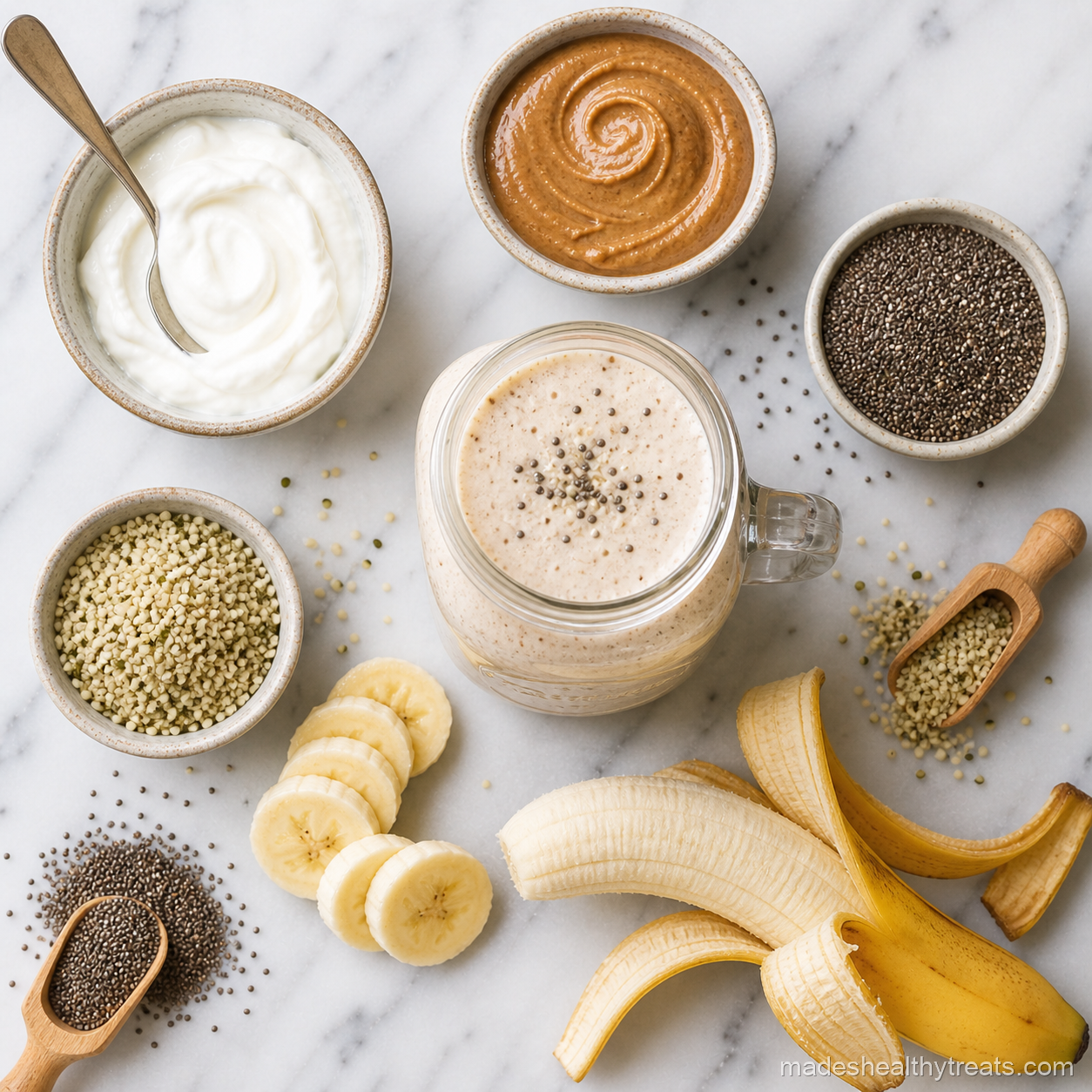
Blend 1 cup unsweetened soy milk or dairy milk, 1 banana, 1 tablespoon peanut butter, and a handful of ice. A pinch of cinnamon is optional. This is a mild, creamy choice when you don't want a strongly fruity drink. Peanut butter adds flavor and some protein, but it should not be treated as the sole protein source. Use sunflower seed butter if peanuts are an issue, and check the package for allergens.
3. Silken tofu and mango
Blend ½ cup silken tofu, ¾ cup frozen mango, ½ cup unsweetened soy milk, and 1 teaspoon lime juice. Silken tofu disappears into the texture, while mango brings most of the sweetness. Add more lime if it tastes flat. Tofu and soy milk make this dairy-free, though both contain soy.
4. Kefir and peach
Blend 1 cup plain kefir, 1 cup sliced frozen peach, and 1 tablespoon oats. Leave it for a minute after blending if you want the oats to soften. Kefir brings a tart flavor and a drinkable texture. If you avoid dairy, use a non-dairy cultured drink and check its protein content; it may be quite different from dairy kefir.
5. Cottage cheese and pineapple
Blend ½ cup cottage cheese, ¾ cup frozen pineapple, ½ cup cold water, and a squeeze of lime. Blend a little longer than usual to smooth out the curds. The result is tangy and tropical. Choose a cottage cheese you already enjoy, since salt levels and flavor vary. If the texture still bothers you, the yogurt version above is an easier place to start.
Which one should you make first?
Choose berries and yogurt for tang, peanut butter and banana for a familiar flavor, or tofu and mango for a dairy-free option. If a smoothie is your full breakfast and you find yourself hungry soon afterward, pair it with food you can chew or adjust the recipe to fit your needs. Fullness differs from person to person; no recipe can promise it for a set number of hours.
Can a smoothie replace a meal?
It can be part of a meal, but fruit and water alone may not provide what you need. Consider protein foods and food alongside the drink rather than assuming any large glass is a complete breakfast. If you follow a medical diet, get individual guidance.
Making it ahead
Portion fruit into freezer containers so the morning work is mostly done. Keep dairy, tofu, or milk refrigerated until blending. A blended drink is best enjoyed promptly for its texture; if you save it, cover and refrigerate it right away. FoodSafety.gov's two-hour rule applies to perishable ingredients left unrefrigerated. For more prep ideas, see our smoothie meal prep guide.
If you'd like a single recipe page, try the peanut butter banana smoothie and adjust the liquid to suit your blender.