A smoothie ingredient can be useful without a “superfood” label. Choose it for the ingredient list, preparation, and what it contributes to your recipe.
Ten ingredients and their nutrients
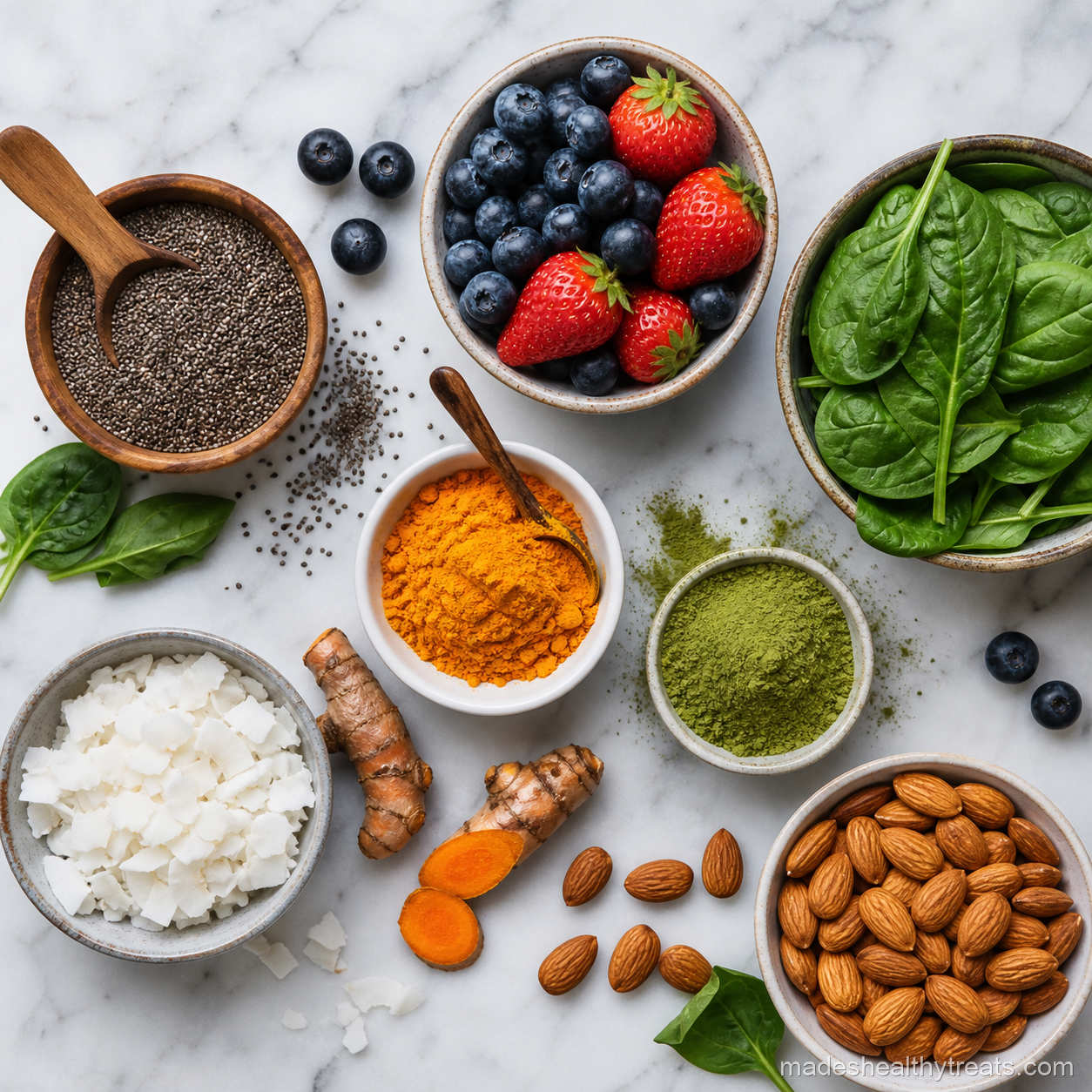
- Chia seeds: contains magnesium. USDA ingredient record.
- Ground flaxseed: contains dietary fiber. USDA ingredient record.
- Peanut butter: contains protein. USDA ingredient record.
- Oats: contains dietary fiber. USDA ingredient record.
- Spinach: contains folate. USDA ingredient record.
- Strawberries: contains vitamin C. USDA ingredient record.
- Mango: contains vitamin C. USDA ingredient record.
- Papaya: contains folate. USDA ingredient record.
- Banana: contains potassium. USDA ingredient record.
- Plain dairy yogurt: contains calcium. USDA ingredient record.
Choose a role before adding more
Choose fruit for the fruit component, yogurt for a creamy base, and oats or seeds when you want more body. Start with one extra ingredient so you can see how it changes the blend. Read labels for allergens and added ingredients.
What these facts tell you
These USDA records describe the named foods. They do not calculate your glass or promise a skin, energy, or weight result. Brands and quantities matter, especially when using fruit pulp, plant-based yogurt, or a prepared drink.
Find measured combinations in the smoothie collection.
Choose one ingredient for a specific job
Before buying another bag of seeds or powder, decide what your recipe needs. For a thicker blend, compare oats, chia, or yogurt rather than adding all three. For a different fruit component, swap one fruit at a time. Buy a small package first when the ingredient is unfamiliar; a large container is less useful if you dislike the result or cannot finish it according to its storage directions.
Prepare seeds, greens, and frozen fruit
Wash fresh greens and remove damaged leaves. Measure seeds with a spoon rather than tipping from the bag. Start the blender with liquid, add the softer ingredients, and introduce frozen pieces gradually if your machine requires that approach. Chia absorbs liquid as it stands, so check the consistency again before adding another spoonful. Stop the machine before scraping or stirring.
Make a deliberate substitution
Peanut butter, yogurt, and oats perform different jobs even though all can change thickness. Replacing yogurt with water removes a creamy ingredient, so simply keeping the same volume may produce a much thinner drink. A plant-based yogurt can preserve some of the texture, but check its ingredients and label rather than assuming the dairy-yogurt nutrient values apply. Check nut and seed labels for allergens before choosing a swap.
Avoid a crowded blender
A common mistake is adding several strong ingredients and then trying to correct the result with more sweetener. Begin with one recipe and one adjustment. If it is too thick, add liquid gradually. If a powder remains dry at the sides, switch the blender off and scrape it down. Follow the blender's capacity limit rather than filling it to the rim.
Store ingredients separately
Keep seeds, nut butter, and oats as their packages direct. Keep yogurt refrigerated and frozen fruit frozen until preparation. Store a finished blend covered in the refrigerator promptly; making a small batch avoids having to manage a large leftover pitcher.
Short FAQ
Do I need every ingredient in this guide?
No. Use the ingredients required by the recipe you choose.
Can I add two thickeners?
You can experiment, but start with smaller amounts and check the texture before adding more.