By Made’s Healthy Treats · Published October 1, 2026 · Recipe ideas; adjust to your ingredients and equipment.
Sometimes every smoothie seems to taste like banana, even when the label says berry or chocolate. You can leave it out. But first work out what it was doing in the recipe: adding sweetness, making the texture thick, or helping frozen ingredients blend into something smooth.
A good replacement answers that specific need. Swapping banana for the same amount of watery fruit can leave a thin drink. Adding a large spoonful of oats may fix thickness but introduce grit. Here is a more deliberate way to build a banana-free glass.
Replace the job, not just the volume
- For fruity sweetness and body: begin with ½ cup frozen mango. Its flavor is more tropical than banana.
- For a mild, creamy texture: try ¼ cup ripe avocado. It contributes less sweetness, so pair it with fruit you already enjoy.
- For thickness with a breakfast flavor: start with 1–2 tablespoons rolled oats, blended with the liquid first.
- For tang and creaminess: try ⅓ cup plain yogurt or a suitable plant-based yogurt. Different products have different thicknesses.
- For chill alone: a few ice cubes work, but ice is not a full replacement for banana. It can dilute the flavor as it melts.
These amounts are starting points, not exact equivalents to every banana. A small ripe banana and a large underripe one differ in size, sweetness, and texture. Choose one change, blend, and taste before adding something else.
1. Mango peach: fruit does the thickening
- ¾ cup frozen mango
- ½ cup peach slices, fresh or frozen
- ¾ cup cold water or unsweetened oat drink
- 1 teaspoon lemon juice, optional
Add liquid first, followed by fruit. Blend until smooth, adding a tablespoon of liquid if the mixture stops circulating. Fresh peach makes a lighter drink; frozen peach makes it thicker. Taste before adding lemon. Mango already supplies a strong fruit flavor, so this version does not need a long list of extras.
2. Strawberry avocado: creamy without banana flavor
- 1 cup frozen strawberries
- ¼ cup ripe avocado flesh
- ¾ cup unsweetened plant drink or milk that suits you
- ½ teaspoon vanilla extract, optional
Blend the liquid and avocado first, then add strawberries. Strawberry tartness varies, so check the taste after blending. If you want it sweeter, start with a teaspoon of your preferred sweetener rather than assuming avocado adds sweetness. If it tastes too strongly of avocado, use less next time or increase the strawberry proportion. This combination contains ingredients to check for allergies, depending on the liquid you choose.
3. Cocoa oat: a less fruity option
- 1 cup milk or unsweetened plant drink
- 2 tablespoons rolled oats
- 1 tablespoon smooth peanut butter or suitable seed butter
- 1 teaspoon unsweetened cocoa powder
- 3–4 ice cubes, if your blender handles ice
Blend the oats with the liquid first, then add butter and cocoa. Add ice last if wanted. Unsweetened cocoa can taste bitter; this is deliberately a starting amount, not a claim that the drink will taste like a sweet chocolate shake. Taste and adjust with a little sweetener if desired. This version is more pourable than the frozen-fruit combinations.
Why the texture changes after a few minutes
A smoothie is not a fixed object once it leaves the blender. Ice melts, fruit pulp can settle, and oats can absorb liquid. If a glass thickens while you are getting ready, stir in a small splash of liquid. If it separates, stir before adding more ingredients. Separation alone does not mean the recipe needs another thickener.
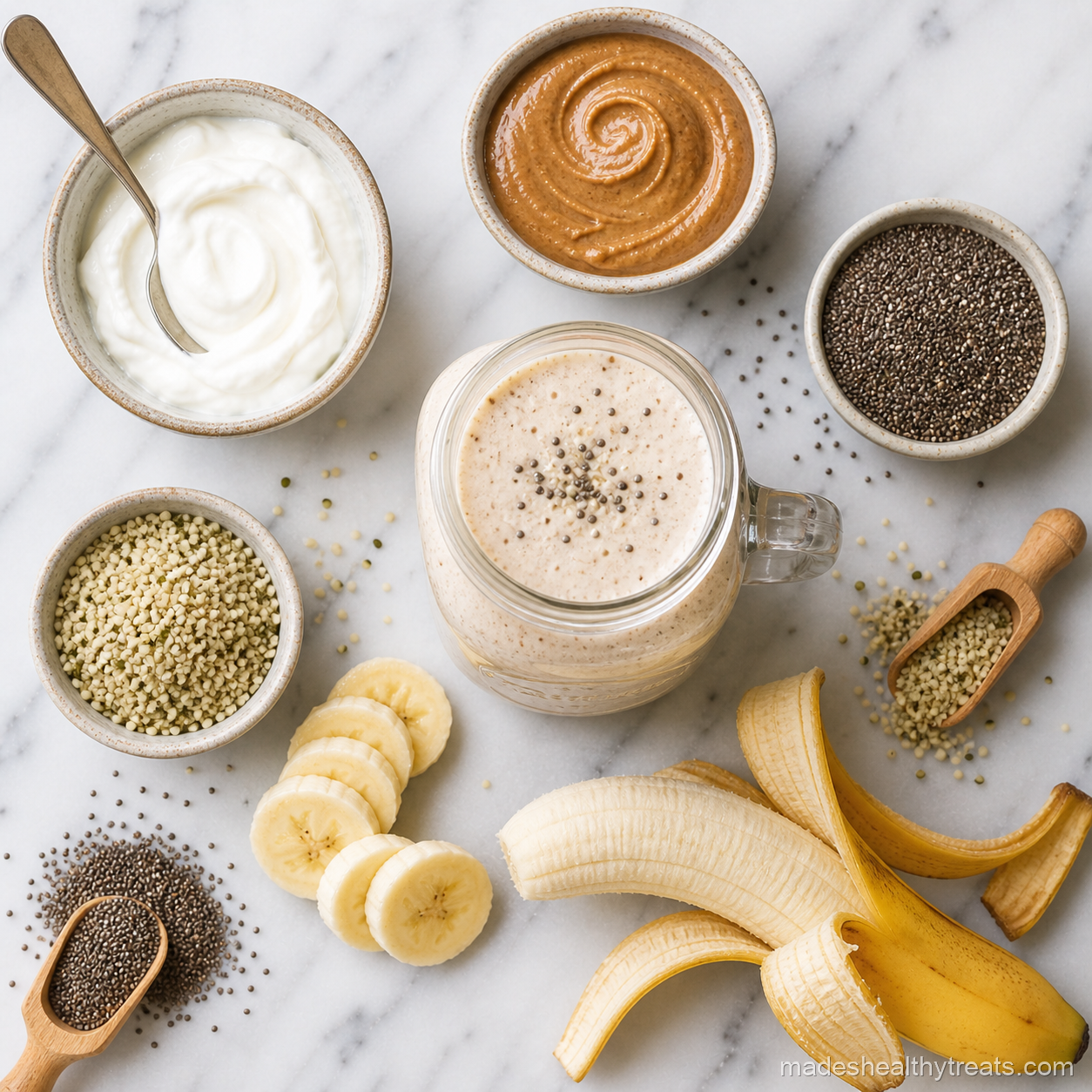
Chia seeds also change the texture as they sit. If experimenting with them, start with a teaspoon and allow time to see the effect before adding more. Do not expect a large handful of seeds to disappear into a smooth drink.
When a swap is not worth forcing
If the original recipe is mostly frozen banana with a little milk, it is closer to a banana-based frozen dessert. One simple substitution may not preserve it. Start with a recipe built around mango, berries, or another ingredient instead. A useful adaptation should still taste like something you want to drink.
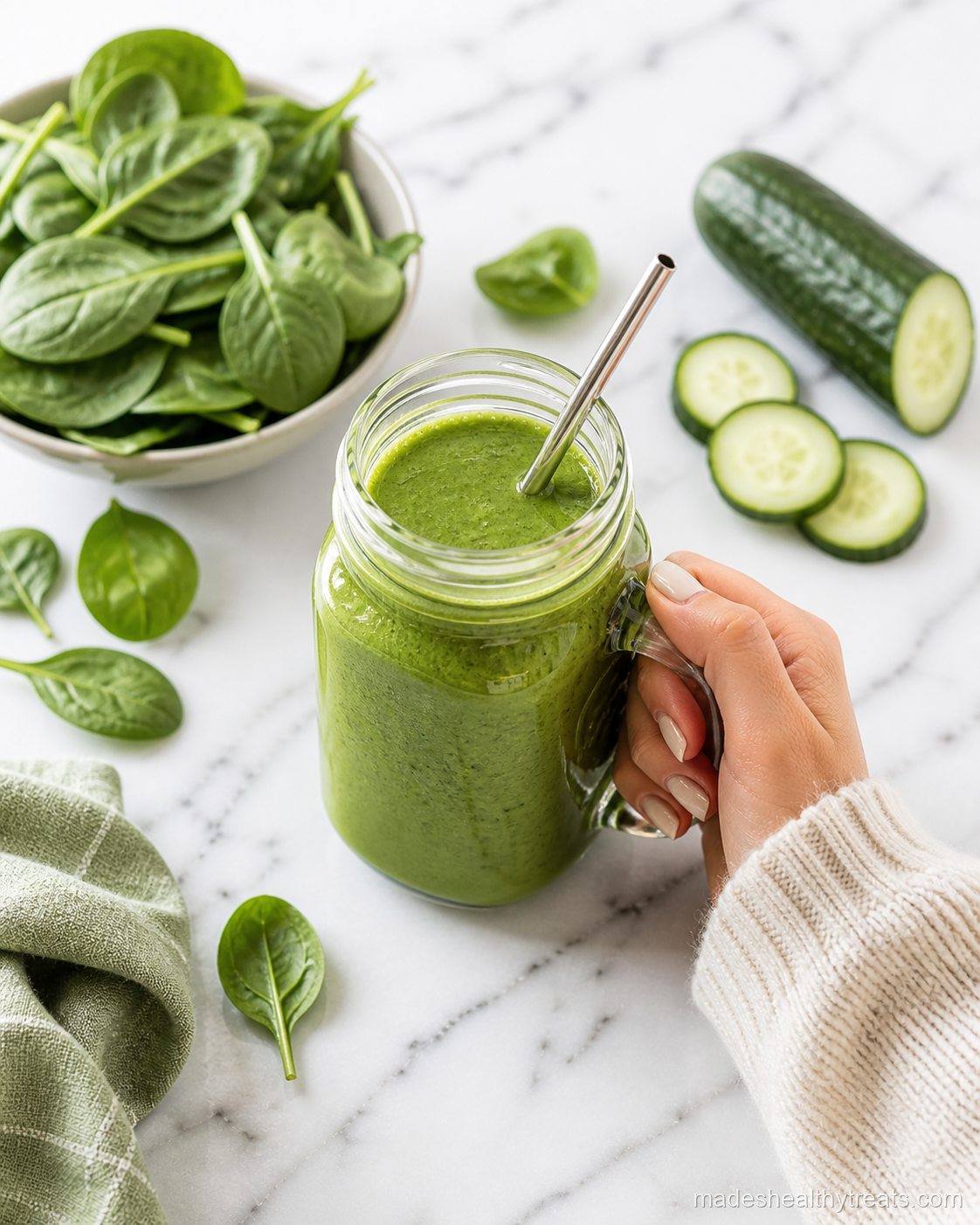
For a green drink, choose mango for a stronger fruit flavor or avocado for a milder creamy base. Start with a modest amount of greens and build up according to taste. The green smoothie guide explains the ingredient balance.
Make the next glass easier
Record the fruit amount, liquid amount, and one texture note. “½ cup mango, too thin” gives you a useful starting point next time. “Add every thickener in the cupboard” does not. For more adjustments, see common smoothie problems; for recipes without dairy, try three creamy dairy-free combinations.
Wash fresh produce and equipment before preparation, follow frozen-fruit package directions, and refrigerate a saved drink promptly. FoodSafety.gov's preparation and chilling guidance applies to smoothies too.