Choose a smoothie by its ingredients and portions. A “fat-burning” label is not a nutrient calculation or evidence that a particular drink changes body fat.
Ingredients and what they contain
- Plain dairy yogurt: contains protein. USDA ingredient record.
- Oats: contains dietary fiber. USDA ingredient record.
- Peanut butter: contains magnesium. USDA ingredient record.
- Strawberries: contains vitamin C. USDA ingredient record.
A simple starting combination
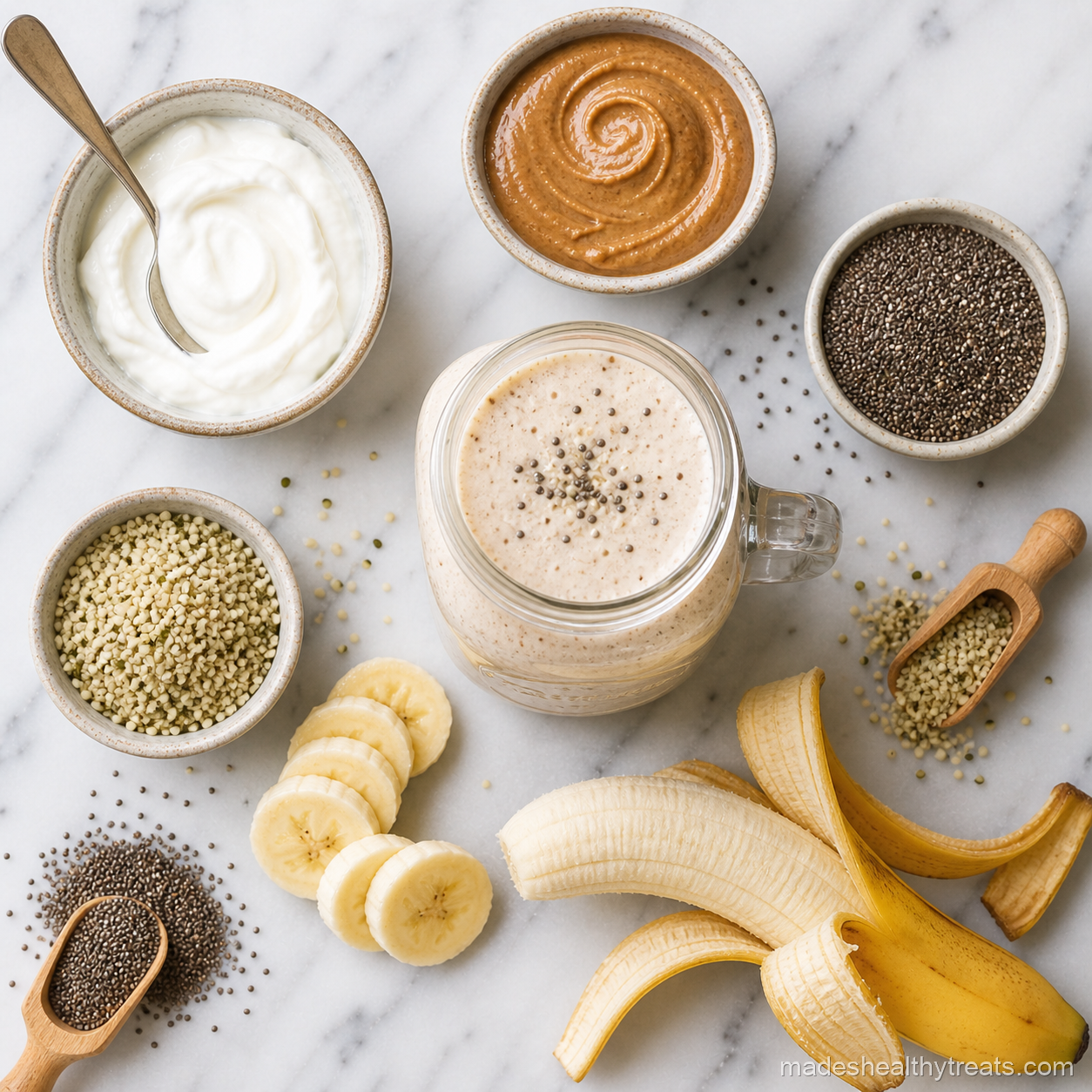
Use ¾ cup plain yogurt, ¾ cup frozen berries, half a banana, and enough water or milk to blend. Add the liquid and yogurt first, then fruit. Taste before adding sweetener.
Use the quantities you actually choose
The ingredient facts above are not nutrition totals for that combination. A different yogurt, an extra spoonful of nut butter, or a larger portion changes the calculation. The NIH portion guide distinguishes the portion you serve from a package's serving size.
Keep the cooking choices clear
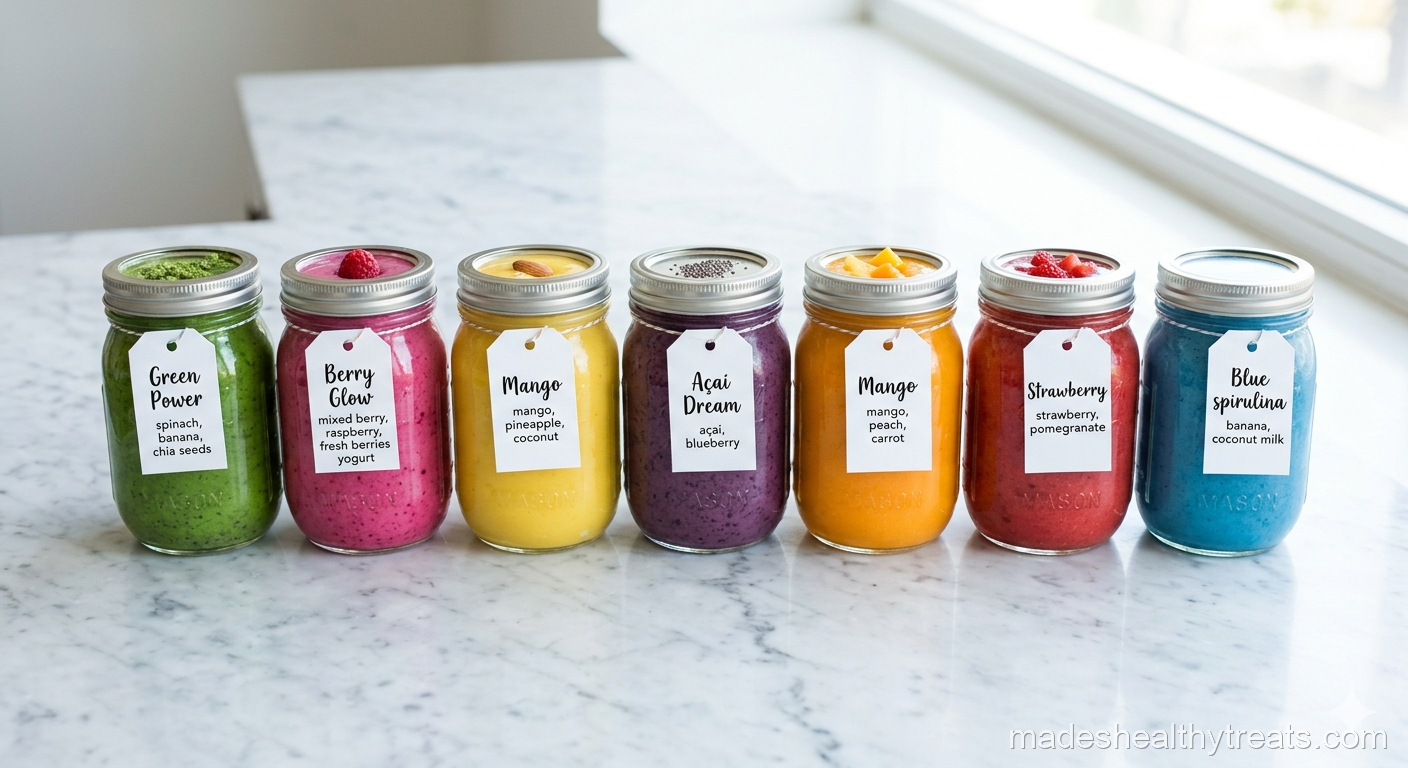
Use yogurt for a creamy base, fruit for the fruit component, and a small amount of oats if you want more body. You do not need every ingredient listed here in one glass. Find measured combinations in the smoothie collection.
Choose a base you can measure
Look at whether the recipe calls for plain yogurt, a drinkable yogurt, milk, or water. These ingredients have different consistencies and labels. Measure the base before adding fruit. When comparing two recipes, compare the actual quantities instead of deciding from the title or the size of the photograph. A large jar may hold more than the portion you want.
Prepare fruit and oats separately
Remove fruit cores, pits, and peel as the recipe directs. Cut frozen pieces to suit the blender and measure oats with a spoon or cup before tipping them in. Put the base liquid into the jar first. If the blend becomes too thick, stop and add a small amount of liquid. Repeatedly adding oats and then adding water can turn a simple recipe into a much larger batch.
Understand the substitution
Nut butter is not a direct replacement for yogurt: it is more concentrated and does not provide the same volume of liquid. A plant-based yogurt can be a texture option, but check its nutrition label and allergens. Replacing berries with banana changes both the fruit and consistency. Try one change at a time with the same overall recipe scale before deciding whether to make a larger amount.
Common portion mistakes
Pouring from a bag, using a heaped spoon when the recipe specifies a level one, and adding toppings without measuring all change the finished amount. None of those changes is automatically wrong, but they mean the written recipe no longer describes the exact glass. If you need a nutrient calculation, use the quantities and product labels you actually used rather than copying another recipe's totals.
Storage and preparation
Return refrigerated ingredients to the fridge after measuring. Put leftovers into a covered container promptly. If preparing ingredients ahead, keep the added liquid separate so the next batch starts with a known amount rather than an already diluted mixture.
Short FAQ
Must I add nut butter and oats?
No. Follow a recipe that fits the ingredients and texture you want.
Will a smaller glass change the ingredient totals?
It changes the portion you serve, but the whole batch still contains every ingredient added.