By Made’s Healthy Treats · Published October 1, 2026 · Recipe ideas; adjust to your ingredients and equipment.
Taking yogurt out of a smoothie can leave a gap: the drink still has fruit, but it no longer feels creamy. The answer is not always more ice. Choose an ingredient that supplies body, then add enough liquid to let the blender work.
This guide gives you three starting combinations and explains how to adjust them. The amounts are recipe suggestions, not laboratory nutrition calculations or claims of personal testing. Use ingredients that suit your dietary needs and check their labels.
Choose the texture before the milk
For a thick, spoonable blend, begin with frozen fruit and a smaller amount of liquid. For a drink you can sip easily, use more liquid or a mix of fresh and frozen fruit. A liquid change alone cannot replace every job that yogurt did.
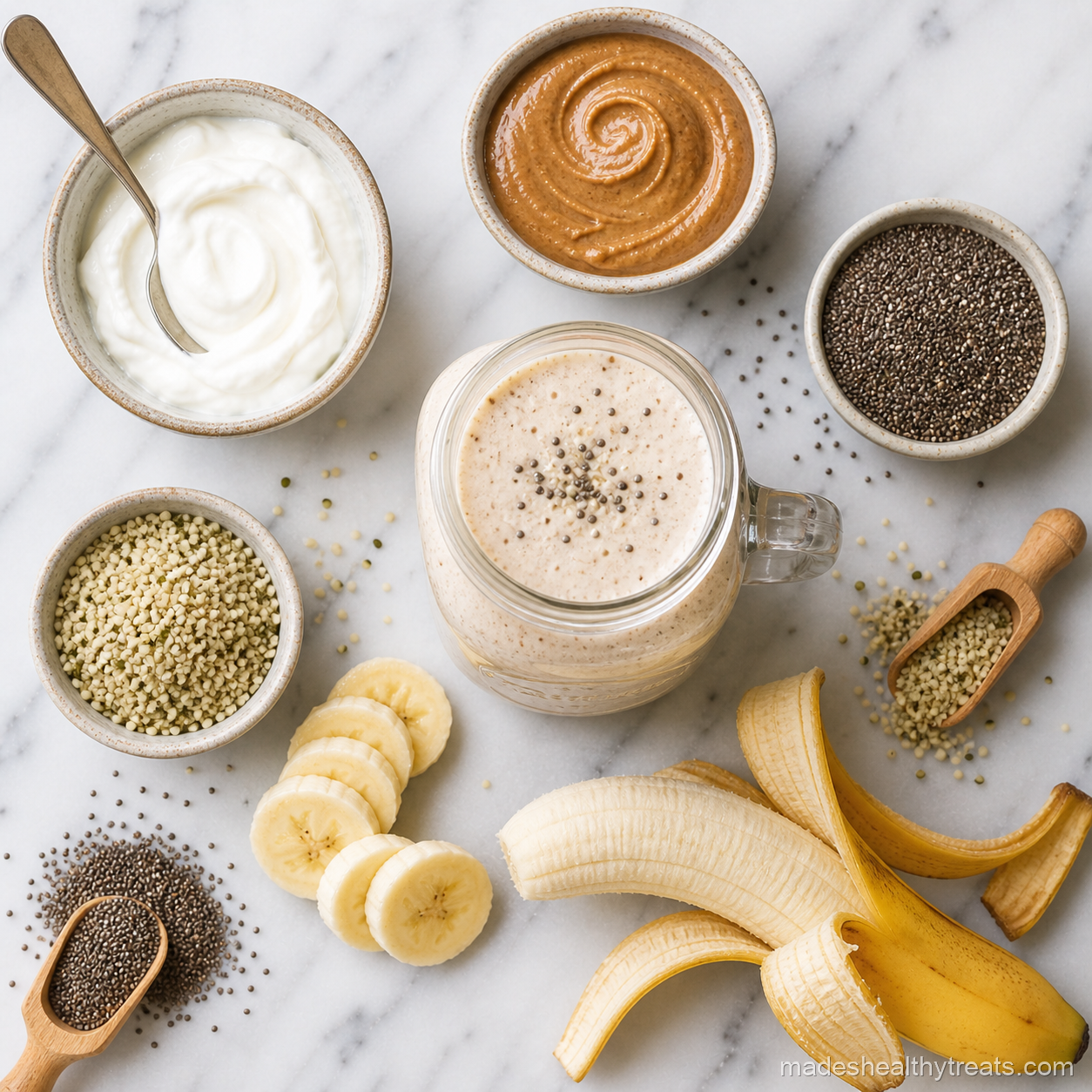
- Frozen banana: adds sweetness and a soft, thick texture. Its flavor is noticeable.
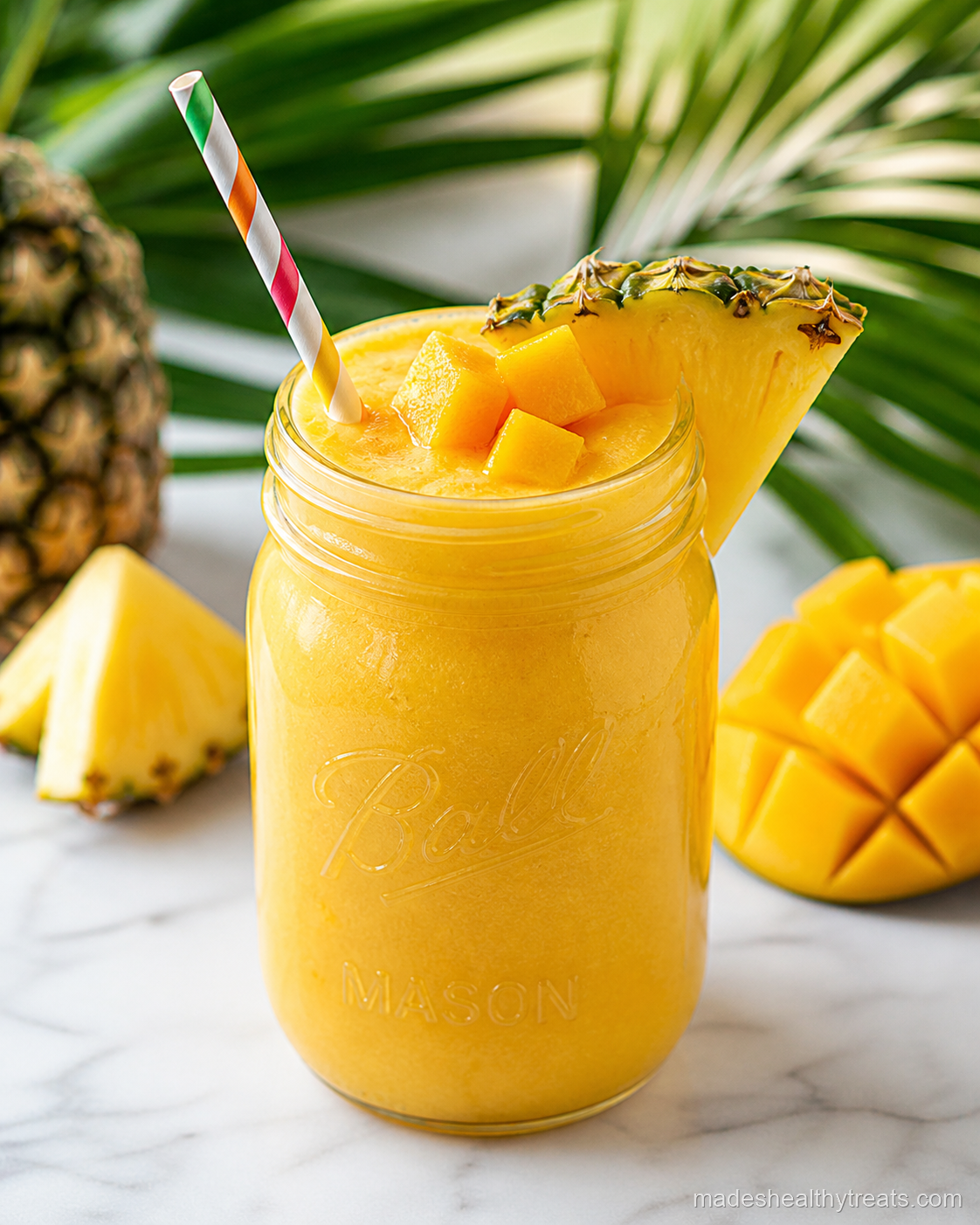
- Frozen mango: gives body and a fruitier finish. Useful when you want a tropical drink.
- Rolled oats: add thickness, but may leave small particles in a less powerful blender. Soaking them in the recipe liquid first can help.
- Nut or seed butter: adds richness and its own flavor. Start with a tablespoon rather than adding several at once.
Pick one main thickener first. Oats, banana, nut butter, and very little liquid together may produce something closer to paste than a drink.
Which plant milk should you use?
Choose an unsweetened product if you want more control over sweetness. Oat drinks often suit cinnamon or cocoa; soy drinks can work with berries; almond drinks bring a lighter nutty flavor. Products vary, so these are flavor directions rather than promises about every carton.
Canned coconut milk and a carton of coconut beverage behave differently. The canned product can make a richer drink; using it as a direct cup-for-cup swap may overwhelm the fruit. Try a small spoonful with water first if that is what you have.
The FDA explains that plant-milk nutrition varies. Compare protein, added sugars, and fortification on the labels rather than assuming every alternative is nutritionally equivalent. These recipes focus on texture and taste.
1. Mango, lime, and oat drink
- ¾ cup frozen mango
- ½ small banana, fresh or frozen
- ¾ cup unsweetened oat drink
- 1 teaspoon lime juice, then more to taste
Add the oat drink first, then the fruit. Blend until smooth and taste before adding more lime. Fresh banana gives the blender an easier start; frozen banana makes the result thicker. For a banana-free version, use ¼ cup more mango and begin with slightly less liquid. That changes the flavor and texture rather than reproducing banana exactly.
2. Berry and peanut butter
- 1 cup frozen mixed berries
- ¾ cup unsweetened soy drink, or another suitable plant drink
- 1 tablespoon smooth peanut butter
- ½ small ripe banana
Blend the liquid with peanut butter first, then add the fruit. Expect a little berry-seed texture; longer blending does not necessarily remove it. If you prefer a smoother drink, choose frozen strawberries without a seed-heavy berry mix. Sunflower-seed butter changes the flavor and can replace peanut butter when appropriate for your needs, but check its label too.
3. Cinnamon peach oats
- 1 cup frozen peach slices
- ¾ cup unsweetened oat drink
- 2 tablespoons rolled oats
- A small pinch of cinnamon
Soak the oats in the liquid in the refrigerator for about 15 minutes as a texture step. Blend that mixture first, then add peaches and cinnamon. If the fruit is tart, taste before deciding whether you want a little sweetener. There is no need to sweeten the whole batch automatically.
Fix the drink you have
Too thin? Add a few pieces of frozen fruit and blend again. Too thick? Add liquid one tablespoon at a time. Too gritty? Use fewer oats next time and blend them with the liquid before the fruit. Too much nut-butter flavor? Split the drink and blend one half with more fruit and liquid; simply adding sweetener will not remove that flavor.
Labels and storage still matter
A dairy-free recipe can contain other allergens, including soy, peanuts, or tree nuts. Read ingredient and allergen labels; check shared equipment when preparing for someone with an allergy. The FDA's allergen guidance explains labeling and cross-contact.
Serve after blending for the freshest texture. If saving a drink, cover and refrigerate promptly. For advance prep, freeze the fruit in portions and add the liquid when blending. The freezer-pack guide covers the method, and the banana-free guide offers different thickening options.