By Made’s Healthy Treats · Published October 1, 2026 · Recipe ideas; adjust to your ingredients and equipment.
A smoothie recipe can look inexpensive until you buy five ingredients you will only use once. This plan shares fruit, oats, and one liquid across five packs. You get three flavor combinations without needing three separate shopping trips.
“Budget” here means keeping the ingredient list short and making use of what you buy. It does not mean a guaranteed price per drink. Store prices, package sizes, and what is already in your cupboard change the cost. The quantities below let you calculate your own batch instead of relying on a made-up total.
The plan: two berry, two mango, one mixed
Each pack is a starting portion for one smoothie. Glass size will depend on the fruit, liquid, and any additions. These are practical combinations, not nutritionally complete meal plans.
- Two berry packs: each gets ¾ cup frozen berries, ½ small banana, and 1 tablespoon rolled oats.
- Two mango packs: each gets ¾ cup frozen mango and ½ small banana.
- One mixed pack: ½ cup frozen berries, ½ cup frozen mango, and 1 tablespoon rolled oats.
At blending time, start with ¾ cup of your chosen liquid per pack. Keep extra available and add it a tablespoon at a time if needed. You can use cold water, milk, or an unsweetened plant drink; the flavor and richness will change.
Your shopping list, with batch totals
- Frozen berries: 2 cups total: 1½ cups for the berry packs plus ½ cup for the mixed pack.
- Frozen mango: 2 cups total: 1½ cups for the mango packs plus ½ cup for the mixed pack.
- Bananas: 2 small bananas, divided into four half-banana portions.
- Rolled oats: 3 tablespoons total.
- Liquid: 3¾ cups for the five starting portions, plus a little extra for adjustments.
- Containers: five freezer-safe bags or containers, or make a smaller batch with the ones you have.
Check the package before buying. A bag labeled by weight may not tell you how many measured cups it contains, and loosely packed fruit chunks do not have one universal cup weight. If precision matters for shopping, weigh your first measured portion and use that weight with the package size.
Change the list before you spend money
Already have peaches? Use them in place of mango and expect a different flavor. Already have a mixed-fruit bag? Divide it into portions rather than buying berries and mango separately. The point of this plan is ingredient reuse, not loyalty to one particular fruit.
Compare the unit price on similar bags, then consider how much you will actually use. A larger bag can cost less per ounce while taking more freezer space and requiring more money at checkout. The smaller bag can still be the better purchase for your situation.
Skip specialty powders for this batch. If you enjoy peanut butter or plain yogurt and already buy it, add a spoonful when blending rather than purchasing several new smoothie-only products. For more substantial combinations, use the powder-free protein guide and check the labels of your chosen ingredients.
Pack it without turning everything into a frozen brick
- Wash hands and clean the work surface and containers.
- Peel and slice the bananas. Measure the fruit for each pack.
- Add the assigned ingredients to each freezer-safe container. Keep the liquid separate.
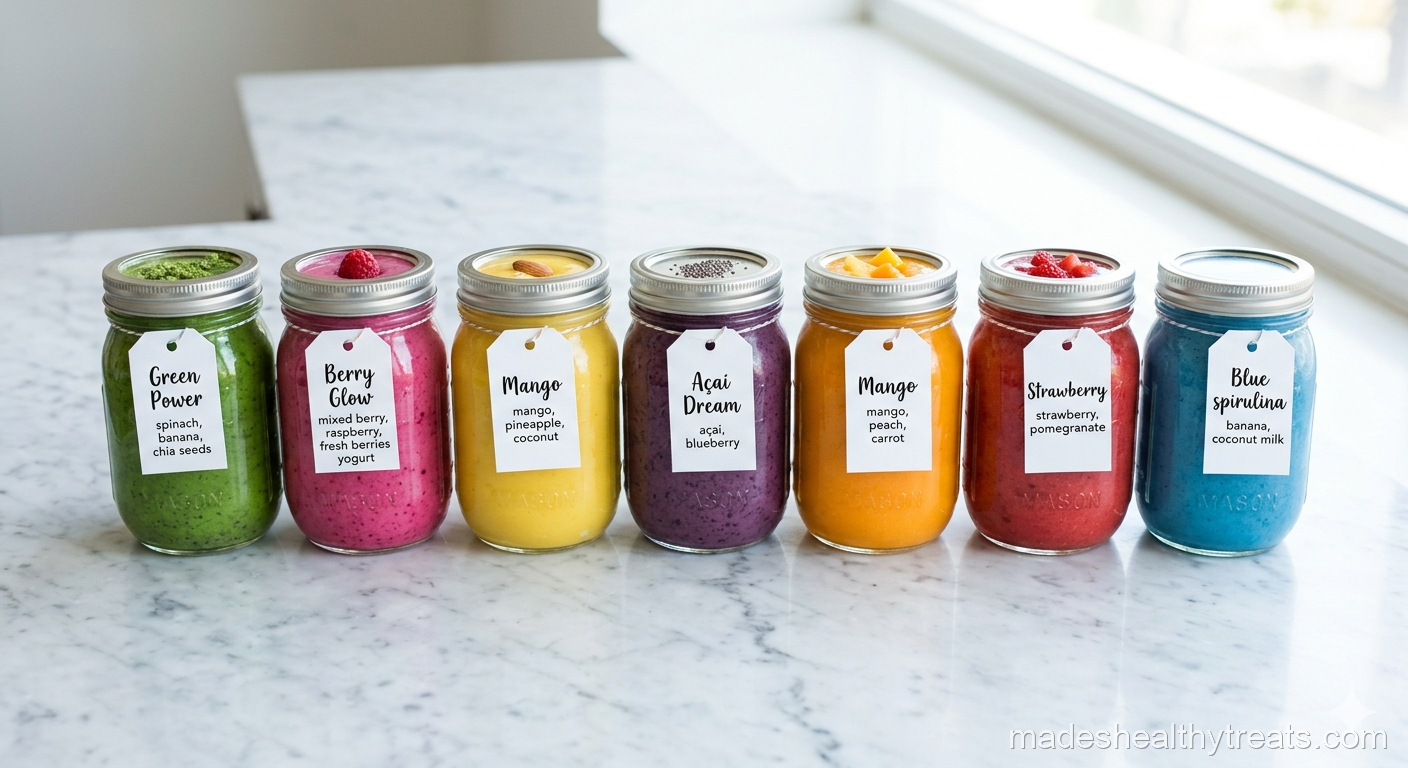
- Label the flavor, prep date, and “start with ¾ cup liquid.”
- Seal and freeze promptly, keeping pieces spread out when the container allows it.
If a mixed frozen-fruit package gives instructions to cook before eating, follow those instructions; do not assume every frozen product is ready to blend raw. The FoodSafety.gov guide covers produce washing and temperature control. Freezing does not remove germs.
A plan for a small shared freezer
You do not have to store five filled containers at once. Make one berry pack, one mango pack, and the mixed pack first. That uses 1¼ cups of each frozen fruit, one banana, and 2 tablespoons oats. Keep the remaining frozen fruit in its original resealed bags and prepare the other two portions later.
If freezer space is very limited, measure directly from the fruit bags at blending time. A written list on the fridge can provide the decision shortcut without adding five extra containers.
Calculate the cost of ingredients used
For an ingredient sold by weight, use: package price × weight used ÷ package weight. Repeat for the other ingredients, add the amounts, and divide by five. Keep all weights in the same unit.
For example, if a hypothetical 500-gram bag costs $4 and you use 250 grams, that fruit contributes $2 to the batch. This is arithmetic only, not a current store price. Include the bananas, oats, and liquid to estimate the full ingredient cost. Reusable containers are a separate purchase, and your checkout bill includes any ingredients left over.
Adjust once, then repeat what works
Blend one pack before preparing a larger batch. If it is too tart, change the fruit balance next time. If it is too thick, increase the starting liquid slightly. Keep a note of the adjustment on the label. You are building a repeatable shortcut, not filling the freezer with drinks you have never tried.
See the full freezer-pack method for blending and storage, or the banana-free guide if banana is the ingredient you want to leave out.