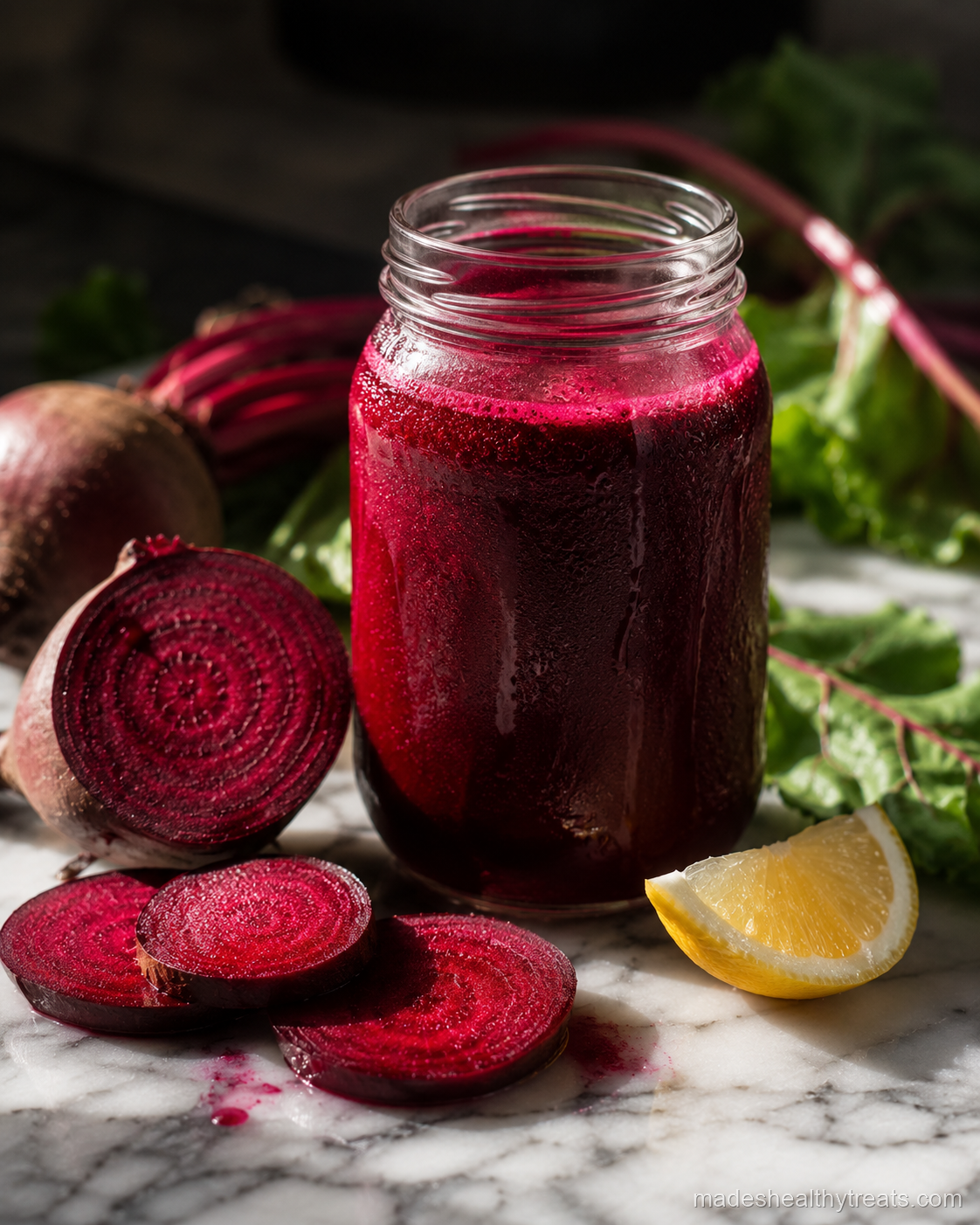
A beet drink starts with produce and a preparation method. Its color is not evidence of a blood-pressure or exercise result.
What's in the ingredients
- Beet: contains folate. USDA ingredient record.
- Apple with its skin: contains dietary fiber. USDA ingredient record.
- Carrot: contains vitamin A. USDA ingredient record.
These facts refer to the edible ingredients. Straining removes some solids and fiber, so an apple's fiber content is not the fiber content of strained beet-and-apple juice.
A small blender batch
Use ½ small beet, one cored apple, ½ cup water, and a squeeze of lemon. Wash the produce, cut the firm beet into small pieces your blender can handle, and blend with the liquid. Strain if you prefer less pulp.
Keep the nutrient facts in context
A homemade batch has no calculated nutrient total here. Produce size, peeling, straining, and dilution all change what is in a serving. The USDA records identify nutrients in foods; they do not measure a health effect of this recipe.
Keep preparation practical
Use a washable cutting board and strain over a wide bowl to catch splashes. Rinse the blender after pouring. For a complete measured recipe, see beet apple carrot juice.
Choose and prepare the beet
Pick a firm beet and wash away soil before cutting. Trim the ends on a washable board and cut pieces small enough for your blender. A whole raw beet is a demanding ingredient for a small personal blender. If your machine cannot process firm raw vegetables, use a recipe written for a suitable ingredient form instead of forcing the blades or assuming a cooked substitute needs identical liquid.
Keep the apple and beet decisions separate
Core the apple and decide whether to leave its skin on before measuring. The reference entry here is for apple with skin. If you use peeled apple or a packaged apple juice, you have changed the ingredient. Start with the measured beet amount and adjust a small sample. This makes it easier to repeat the version you prefer without guessing how much extra fruit entered the blender.
Substitutions that change the preparation
Orange segments can replace some apple in a trial, but remove peel and seeds and expect a different texture. Bottled beet juice is already processed liquid, not a direct replacement for chopped beet. Cooked beet also behaves differently from raw beet. When using a packaged ingredient, follow its label and adjust the added water rather than automatically pouring in the full amount from a raw-produce recipe.
Common mistakes
Overloading the blender with hard pieces, straining through a sieve that is too small, and pressing over a narrow glass all make preparation messier. Blend in manageable batches and strain over a bowl. If the drink is already diluted, more water is unlikely to restore a stronger fruit component; next time, begin with less liquid. More beet is a recipe adjustment, not evidence of a greater health effect.
Serving and leftovers
Pour the amount you plan to drink and cover the remainder promptly. Refrigerate it rather than storing fresh juice on the counter. Wipe beet splashes and rinse the equipment after serving so dried pulp does not cling to the sieve.
Short FAQ
Must I strain it?
No. Keeping the blended solids gives a different texture; straining removes some material.
Can I use the ingredient figures as juice nutrition?
No. The yield and solids removed have not been measured here.