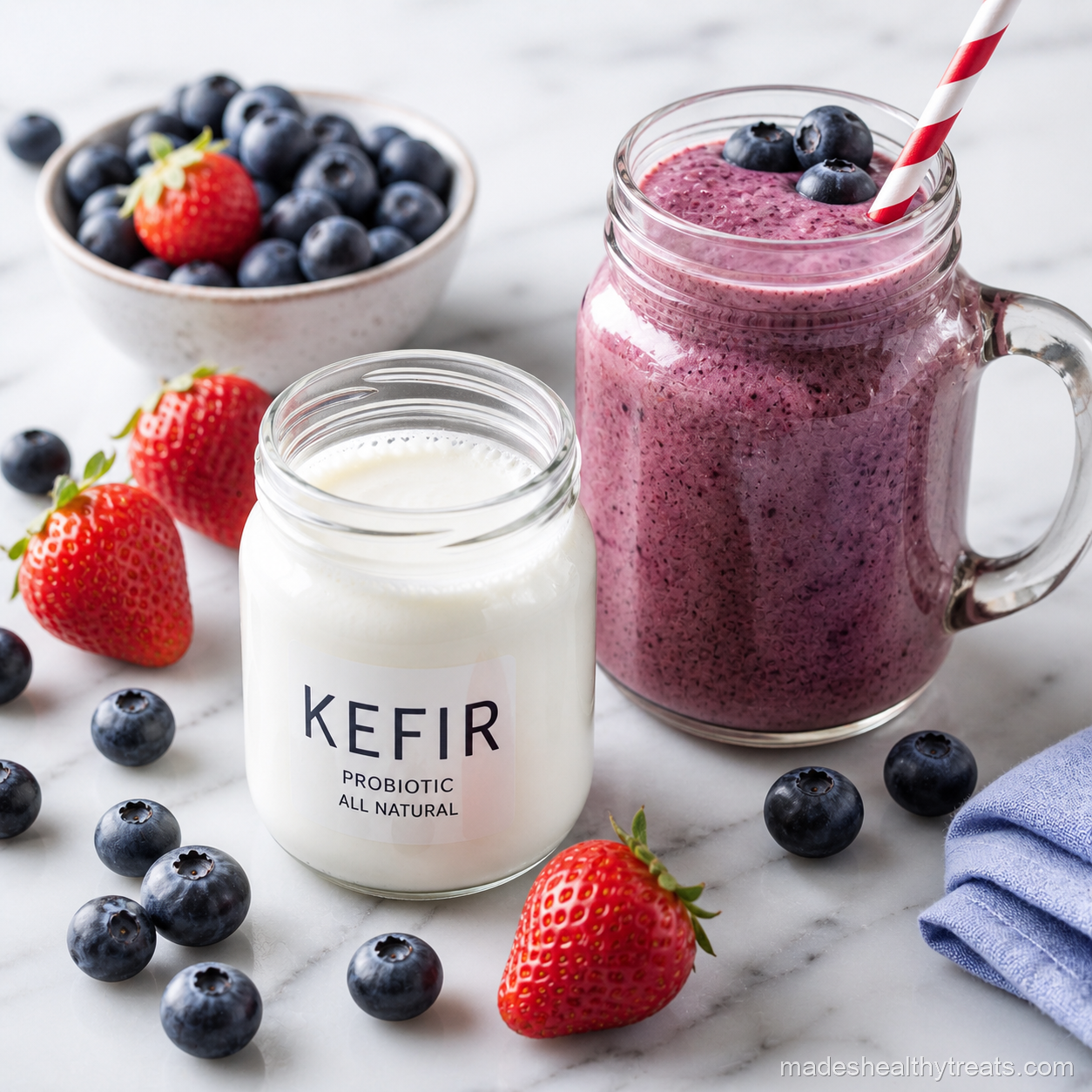
Yogurt and kefir are fermented ingredients used in smoothies. Their labels and nutrient content matter more than a general “gut-friendly” promise.
Ingredient facts for a creamy blend
- Plain dairy yogurt: contains calcium. USDA ingredient record.
- Plain dairy yogurt: contains protein. USDA ingredient record.
- Strawberries: contains vitamin C. USDA ingredient record.
- Ground flaxseed: contains dietary fiber. USDA ingredient record.
The dairy-yogurt record is not a nutrition reference for coconut kefir or every plant-based substitute. Check the product label for the ingredients you choose.
Live cultures and probiotic claims
NIH's probiotics fact sheet explains that fermented foods and products labeled probiotics do not all have established health benefits. Evidence depends on the specific microorganisms and preparation studied.
Choose the base deliberately
Check whether a yogurt or kefir is plain or sweetened, whether it contains dairy, and what its label says about cultures. Taste the fruit blend before adding honey or syrup. Add liquid gradually if a thick yogurt stops the mixture circulating.
One recipe to start with
The berry kefir smoothie has measured ingredients and preparation steps. Its name and ingredients do not establish a digestive-health outcome.
Choose the product before choosing the fruit
Look at whether the base is dairy yogurt, dairy kefir, or a plant-based product. Check whether it is plain, flavored, or sweetened, and read its storage instructions. A thick strained yogurt and a pourable kefir will require different liquid adjustments. The name of the product does not give you its nutrient quantities; the label is the better reference for the container in your refrigerator.
Blend a small portion first
Place the yogurt or kefir and any added liquid in the jar before the fruit. If using frozen berries, add them gradually as your blender instructions require. Do not pack a small blender with frozen fruit and expect a spoonful of yogurt to circulate through it. Stop before scraping the sides. Add extra liquid a little at a time so you can control the final thickness.
Substitute for texture and dietary needs
A plain plant-based yogurt may be a useful texture substitution when avoiding dairy, but it is not nutritionally interchangeable with whole-milk yogurt. Check the label for the particular product. Replacing thick yogurt with a thinner drink may require less added water. Replacing pourable kefir with a dense yogurt may require more. Keep the fruit amount steady during that comparison so you can identify the effect of the base.
Common mistakes with cultured bases
Adding flavored yogurt, sweetened fruit pulp, and honey before tasting makes it harder to judge what needs adjusting. Another mistake is assuming all fermented foods carry the same microorganisms. Keep the culture claim on the product label separate from the finished recipe: blending several ingredients does not establish a studied probiotic dose or outcome.
Keep the cold ingredients cold
Return the base to the refrigerator after measuring. Use a clean spoon, close the container, and follow its use and storage directions. Refrigerate a leftover smoothie promptly rather than leaving the jar on the counter while preparing other meals.
Short FAQ
Can I use flavored yogurt?
Yes, but it changes the recipe's ingredients and sweetness. Taste before adding optional sweetener.
Does coconut kefir have the same nutrients as dairy kefir?
Do not assume so. Compare the specific product labels.