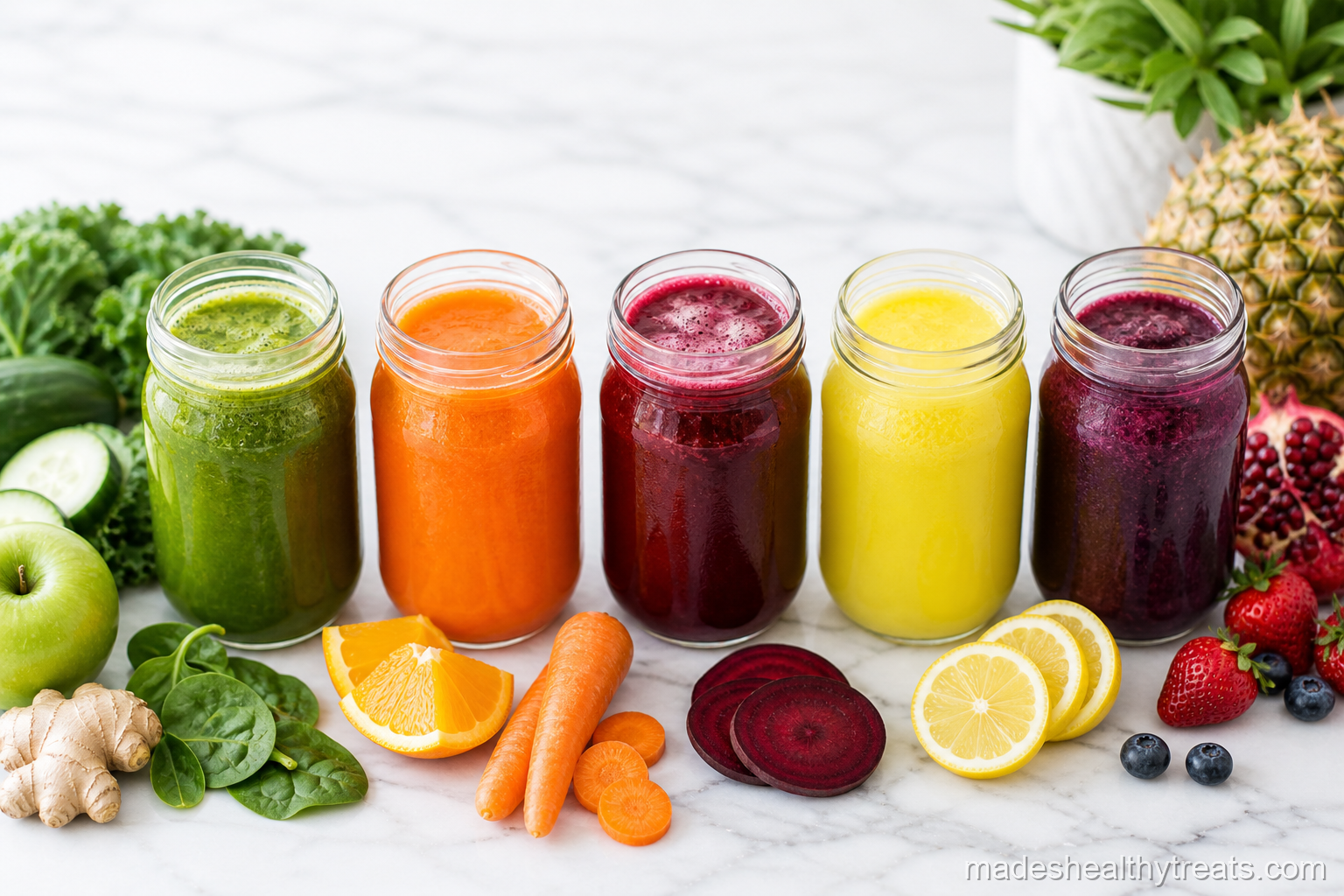
This guide separates facts about juice ingredients from claims about juice-only diets. A nutrient in a fruit does not establish a cleansing effect for a drink.
What the ingredients contain
- Orange: contains vitamin C. USDA ingredient record.
- Carrot: contains vitamin A. USDA ingredient record.
- Cucumber: contains potassium. USDA ingredient record.
Whole ingredients and strained juice
These USDA entries describe edible foods. Straining removes some solids and changes the finished drink; dilution changes the amount in a glass. This page does not provide a nutrition calculation for a juice batch.
What the evidence on cleanses says
NIH's review of detoxes and cleanses describes limited research and does not establish that detox diets remove toxins or provide lasting weight-management benefits.
Prepare juice as a recipe
Choose a measured combination, wash the produce, and use clean equipment. Blend with water and strain if you want less pulp. The blender juice guide gives three combinations and the preparation method.
Check what a claim actually measures
Ask whether a statement concerns a nutrient in an ingredient, a defined product used in a study, or the finished recipe. Those are different measurements. Cover and refrigerate leftovers promptly rather than treating fresh juice as a shelf-stable product.
Choose a recipe instead of a sequence of bottles
Begin with one combination you want to prepare and check its ingredient list before shopping. Choose produce you can wash and cut easily. A homemade drink does not need the same number of ingredients as a commercial juice plan. Read packaged juice or pulp labels carefully if using them, because added ingredients and dilution can differ from the raw-food reference.
Prepare the produce before loading the jar
Wash the produce under running water and remove cores, hard pits, and citrus peel as the recipe directs. Chop firm vegetables into pieces the blender can handle. Add the measured water first and blend in manageable portions. If the jar stops circulating, turn it off before scraping. Do not push ingredients toward moving blades to make a larger batch fit.
Substitute within a measured trial
Orange segments, bottled orange juice, and a spoonful of concentrate are different ingredient forms. Replacing one with another changes water and solids. The same is true of chopped apple and apple juice. Start with a small trial and adjust the added water rather than assuming equal cup measures give an identical drink. Keep a recipe recognizable so you can judge the result.
Common mistakes with juice comparisons
A raw-food database entry is not a calculation for a bottle of strained juice. You would need the ingredient weights, preparation losses, final yield, and portion size to estimate that. Comparing only color or counting the number of vegetables does not provide those measurements. Keep the nutrient information beside the ingredient it describes instead of turning it into a statement about cleansing.
Store a fresh drink as a fresh drink
Cover the amount you are keeping and refrigerate promptly. Do not assume a tightly closed bottle or added lemon makes untreated juice stable at room temperature. Preparing a small quantity close to serving is simpler than managing a large collection of bottles.
Short FAQ
Do I have to remove the pulp?
No. Keep it if you prefer the blended texture.
Can I use a blender rather than buying a juicer?
Yes. Choose a blender method, then strain only if that suits your recipe.